
Your brakes work on a simple idea. The pad presses against a spinning rotor and that friction slows the wheel down. Every time you brake, you wear that pad down a little, and over enough miles the rotor wears too. Heat builds up fast under hard braking, and that heat plus road grit speeds up the wear on both parts. In Binnaguri traffic, with the stop and go you get on local roads, pads often wear faster than drivers expect. A car that carries extra weight, or one that climbs hills on the way to Jalpaiguri or Malbazar, puts even more load on the brakes with every stop. That means the pads and rotors on a car used this way need checking more often, not less, even if nothing feels wrong yet behind the wheel.
Signs You Need Brake Service
- A squeal or screech when you slow down
- Grinding sound that gets worse each day
- Car pulls left or right when you brake
- Pedal feels soft or sinks to the floor
- Steering wheel shakes when you stop
- A burning smell after driving downhill or in traffic
The first sign something is off is almost always a sound, not a feeling. A light squeal means the pad is getting thin and is close to needing replacement. A grinding noise is different and worse. That is metal touching metal, which means the pad is gone and the rotor itself is getting chewed up underneath. If the pedal feels soft, spongy, or sinks lower than it used to before it catches, that points away from the pads and toward the brake lines or the fluid instead. A car that pulls to one side under braking is telling you something else again, usually uneven pad wear or a caliper part that has stuck and stopped doing its job evenly on both sides.
Before we touch a single part, we pull the wheels and look at everything up close. That means checking pad thickness on both sides, looking for grooves, scoring, or heat marks on the rotor surface, and testing how the pedal responds under steady pressure. We also check the brake fluid, both the level and the condition, because fluid that has gone dirty or low can cause pedal problems that have nothing to do with the pads at all. This inspection is what tells us exactly what the car needs. We are not guessing from a sound or a feeling. We are looking at the actual wear pattern and using that to decide what gets fixed and what is still fine to leave alone for now.

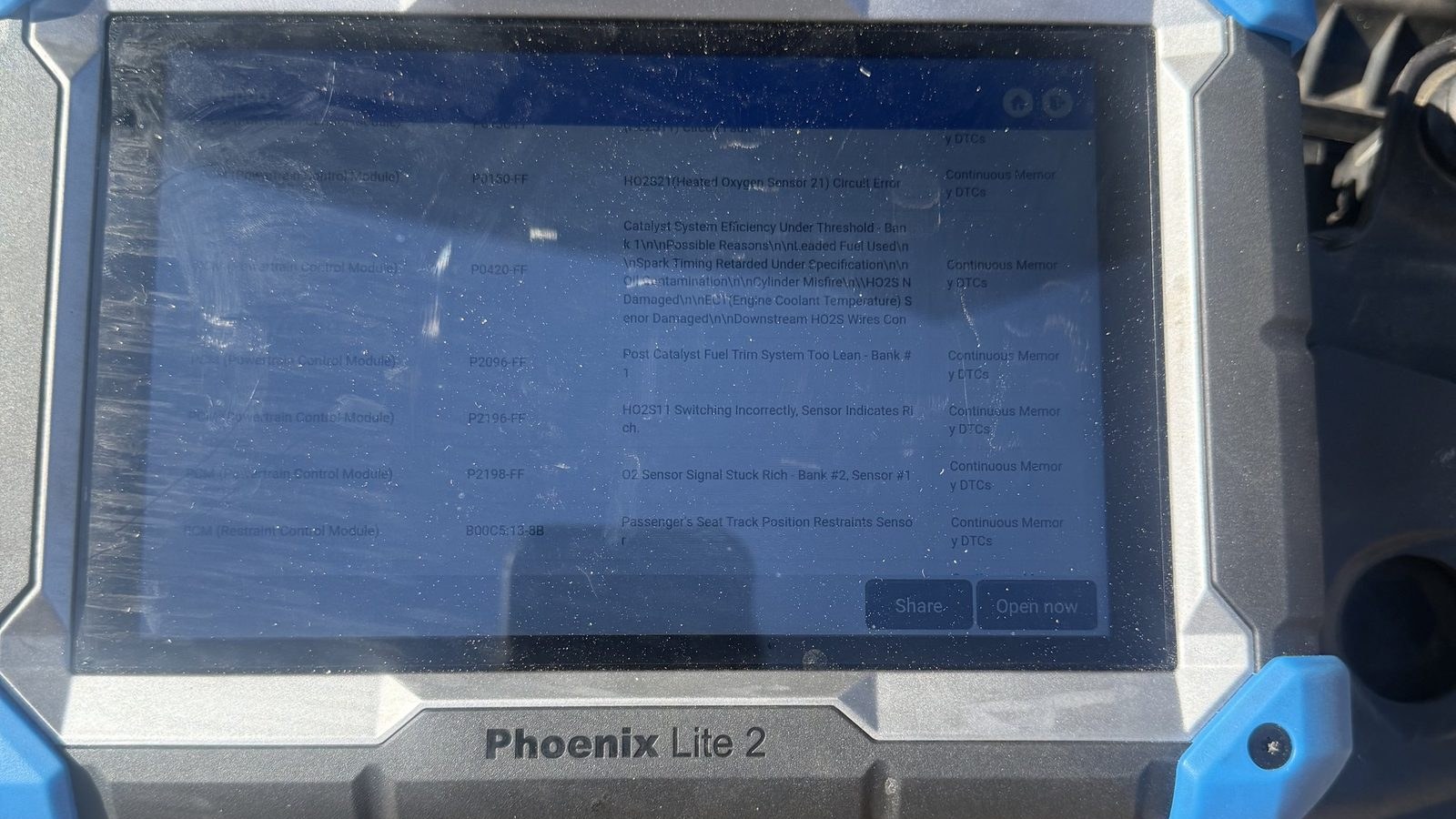
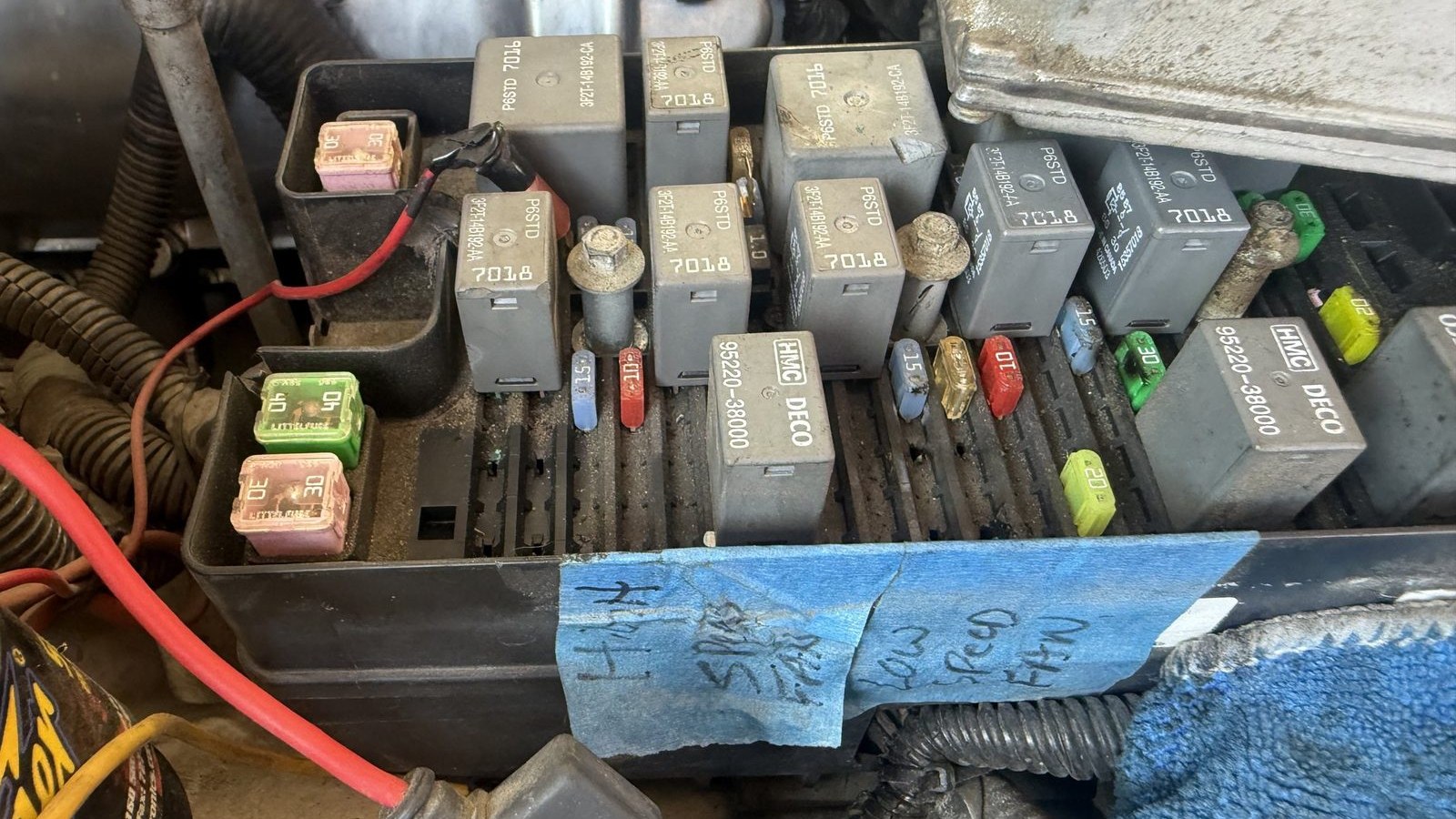
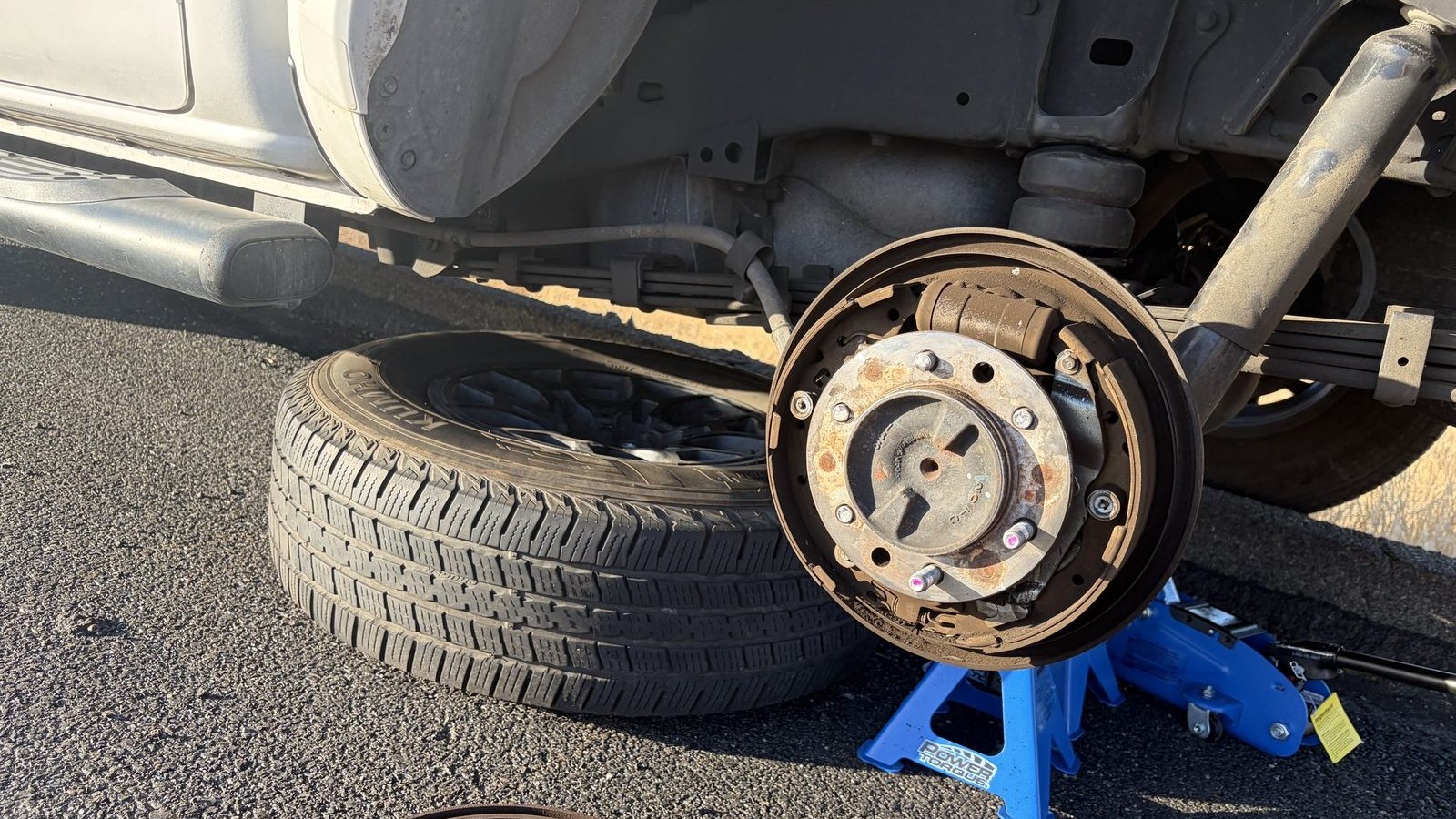
A standard brake service follows the same basic steps every time. We remove the wheel and the caliper, then take out the worn pads and put new ones in their place. If the rotors show scoring or have worn too thin to resurface safely, we replace them instead of trying to save them. The caliper slides get cleaned and lubricated so the new pads sit evenly and wear at the same rate on both sides. Everything gets reassembled and torqued to the correct spec, because a loose or overtightened wheel is its own hazard. The last step is always a test drive, checking that the pedal feels solid and firm and that the car comes to a stop straight instead of pulling to either side.
What actually changes the size of the job is what we find once the wheel comes off. A straightforward pad swap on a car with healthy rotors and calipers is simple, quick work with no surprises. But if the rotors have warped from heat, if a caliper is sticking and dragging on the rotor even when you are not braking, or if a brake line is leaking fluid, the job grows from there. Cars that show more wear on one side than the other usually have a mechanical cause behind that pattern, not bad luck, and that cause needs addressing too. The same goes for cars that have been driven a long stretch on pads that were already worn thin, since that kind of driving tends to damage the rotor underneath along the way.
Drivers around Binnaguri, Banarhat, and Dhupguri dealing with daily stop and go traffic put more cycles on their brakes than drivers on open highway, which is exactly why wear shows up sooner than people expect. The same goes for anyone regularly driving routes toward Siliguri or Birpara that involve hills, since downhill sections mean riding the brakes longer and building up more heat than flat roads do. None of this means something is wrong with the car. It just means the parts are doing real work and need to be checked on a schedule that matches how the car is actually driven, not just a number on the odometer.
Until you get the car looked at, the safest approach is to drive gently and give yourself more room to stop than usual. Avoid hard, sudden braking where you can, and try to skip hauling heavy loads until the brakes are sorted out, since extra weight only adds more strain to parts that may already be worn. If the pedal ever feels soft, sinks further than normal, or the car pulls hard to one side when you brake, do not keep driving on it hoping it holds. That is the kind of warning sign that gets worse quickly and turns a straightforward brake job into something bigger, including a tow, if it is ignored for too long.
What to Tell Us When You Call
- Year, make, and model of your car
- What sound or feel you noticed, and when it started
- Whether the pedal feels normal or soft
- If the car pulls to one side when you brake
 Supercanic